October Concrete Pump Maintenance Checklist for Des Moines Contractors
October’s cooler temperatures can expose costly concrete pump problems. Discover six essential maintenance checks for Des Moines contractors, from freeze protection and hydraulic inspections to boom safety, delivery lines, and post-pour cleanup.
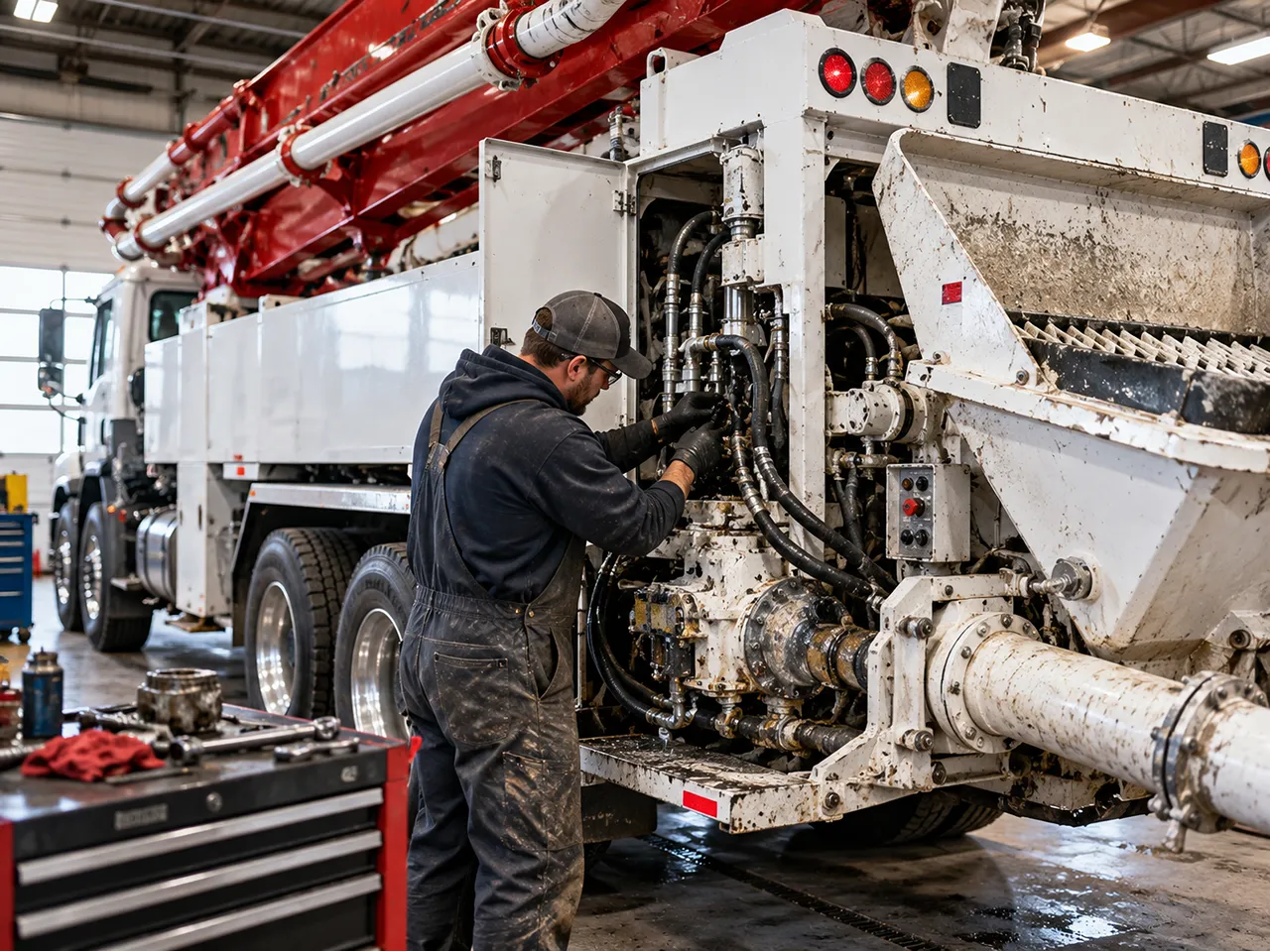
October mornings can catch Des Moines concrete contractors off guard. Your pump works perfectly during an afternoon pour, yet water trapped inside a fitting can freeze overnight, and cooler hydraulic fluid may affect performance the next morning. Concrete pump maintenance helps you identify these risks before equipment failures interrupt scheduled work across Ankeny, West Des Moines, and Polk County.
Why Is October Important for Concrete Pump Maintenance in Des Moines?
October brings unpredictable operating conditions to Central Iowa. While construction continues throughout the region, cooler mornings, occasional freezing temperatures, and wet job sites create additional challenges for concrete pumping equipment.
Des Moines has an average October temperature of approximately 53°F, but that doesn't mean every night brings freezing temperatures; it does mean contractors should prepare vulnerable equipment before the first hard freeze.
For crews working on commercial foundations, infrastructure improvements, or construction near the I-35 corridor, unexpected equipment downtime can disrupt concrete deliveries and labour schedules.
Your concrete pump preventative maintenance routine should focus on six critical areas:
- Water tanks, water boxes, and freeze protection.
- Hydraulic fluid, hoses, fittings, and cylinders.
- Boom structures, controls, and outriggers.
- Concrete delivery pipes, elbows, and clamps.
- Hopper agitators, S-tubes, and wear components.
- Electrical controls and post-pour inspections.
These checks apply to truck-mounted boom pumps and trailer-mounted line pumps, although individual components and inspection procedures vary by model.
1. Protect Concrete Pump Water Systems From Freezing
Water-system protection deserves special attention during October. Even when daytime temperatures remain comfortable, water left inside tanks, valves, washout lines, or fittings can freeze if overnight temperatures drop sufficiently.
As trapped water expands, it can crack fittings, damage lines, and leave your equipment unavailable for the next pour.
October Water-System Inspection Checklist
Your concrete pump water system winterization procedure should include:
- Inspect water tanks for cracks, leaks, and damaged connections.
- Check water boxes for contamination and abnormal fluid levels.
- Examine washout hoses, valves, and fittings for wear.
- Confirm that drain points operate correctly.
- Drain water boxes after use according to manufacturer instructions.
- Drain vulnerable water tanks and lines when freezing conditions are expected.
Alliance Concrete Pumps recommends draining water boxes daily and draining water tanks when equipment will be parked outside in cold weather.
Don't assume emptying the main tank removes every water pocket. Follow the equipment manufacturer's complete draining procedure, especially around low points and connected lines.
For Des Moines contractors storing pumps outdoors overnight, making drainage part of the shutdown routine can prevent a small oversight from becoming an expensive morning repair.
2. Inspect Hydraulic Components Before Colder Weather
Hydraulic systems power essential concrete pump functions, including pumping mechanisms and boom movement.
Cooler temperatures can increase hydraulic fluid viscosity, especially during startup. If the equipment already has worn seals, restricted filters, or deteriorating hoses, these conditions may make existing performance problems more noticeable.
Routine concrete pump hydraulic repair and inspections help prevent sluggish operation and unexpected shutdowns.
Hydraulic Maintenance Checklist
Before the next scheduled pour:
- Check hydraulic oil levels using manufacturer procedures.
- Inspect hoses for abrasion, cracking, bulging, and leaks.
- Examine fittings and connections for seepage.
- Check hydraulic cylinders and rod seals for damage.
- Review filter condition and service indicators.
- Confirm the hydraulic fluid meets manufacturer temperature specifications.
- Follow the approved cold-start and warm-up procedure.
Watch for unusual noises, erratic boom movement, or reduced pumping performance.
Never assume switching to a thinner hydraulic oil is the right solution. Hydraulic fluid selection depends on the pump's design, operating conditions, and manufacturer specifications.
Technicians should diagnose persistent pressure or performance problems rather than simply adding fluid. Hydraulic leaks can involve high-pressure injection hazards, so never check suspected leaks with your hands.
3. Assess Boom Structures and Outriggers
Your boom pump needs more than functioning hydraulics to operate safely. Structural components, support systems, and control mechanisms must also remain in proper condition.
Autumn rain can soften construction-site ground, making outrigger positioning particularly important.
Boom and Outrigger Inspection Checklist
During boom pump maintenance, inspect:
- Boom sections for cracks, deformation, or visible damage.
- Pins, joints, and bushings for abnormal wear.
- Hydraulic cylinders for leaks.
- Outrigger beams and support pads for defects.
- Boom controls for smooth, predictable operation.
- Safety devices and limit functions according to manufacturer procedures.
Before positioning a truck-mounted pump, verify that the ground can support the equipment and that outrigger pads or cribbing meet manufacturer requirements.
Also evaluate overhead power lines, underground utilities, and nearby obstructions before deployment.
If you discover structural damage or unsafe controls, remove the equipment from service until qualified personnel complete the necessary assessment and repairs.
A quick inspection at the yard is far better than discovering an unstable setup after concrete trucks arrive.
4. Check on Concrete Pump Delivery Pipes and Clamps
Concrete pumping creates substantial pressure inside delivery pipelines. Over time, abrasive concrete wears down pipes, elbows, reducers, and other delivery components.
A worn elbow or unsuitable coupling can become a serious safety hazard.
Your concrete pump hose and pipe inspection should examine the entire delivery system before use.
Delivery-System Maintenance Checklist
Check these components carefully:
- Delivery pipes: Look for excessive wall wear, dents, cracks, and corrosion.
- Elbows: Inspect high-wear areas where material changes direction.
- Clamps and couplings: Check for damage, correct fit, and secure connections.
- Gaskets: Replace deteriorated or improperly seated seals.
- Delivery hoses: Examine abrasion, kinks, bulges, and damaged end fittings.
Use manufacturer-approved inspection methods to determine pipe-wall thickness and remaining serviceability. Visual inspection alone cannot establish whether a worn pipe is safe.
Every component must meet the pressure requirements of the pumping system.
Never loosen clamps or open delivery lines while pressure remains in the system. Follow the manufacturer's isolation and pressure-release procedures before maintenance.
5. Maintain Concrete Pump Hoppers, S-Tubes, and Wear Parts
Your hopper and pumping mechanism handle abrasive concrete throughout each pour. Without regular inspection and lubrication, these components can wear prematurely or develop material buildup.
An S-tube that no longer seals properly against its wear components can reduce pumping efficiency and contribute to inconsistent material flow.
Hopper and Wear-Component Checklist
Inspect the following:
- S-tubes for buildup, damage, and abnormal wear.
- Wear plates and cutting rings for excessive clearance.
- Hopper agitators for damage or unusual movement.
- Lubrication systems for adequate grease delivery.
- Hopper interiors for hardened concrete deposits.
- Pumping components for leaks or irregular operation.
If excessive wear appears around the cutting ring or wear plate, schedule a qualified inspection for potential concrete pump S-tube repair or component replacement.
Keep guards in place during operation, and never reach into the hopper or pumping mechanism until the equipment has been properly shut down, isolated, and secured.
Cleaning and inspecting these components after every pour helps you identify problems before the next morning's startup.
6. Electrical Controls and Post-Pour Checks
A functioning pump is only as reliable as its electrical and control systems.
Intermittent wiring problems, weak remote batteries, or malfunctioning emergency stops can interrupt operations even when the mechanical components appear sound.
Electrical and Shutdown Checklist
Before operating, test:
- Emergency-stop controls.
- Wired or wireless remote-control functions.
- Battery condition and electrical connections.
- Warning lights, indicators, and control switches.
- Visible wiring and connectors for damage.
After the pour, complete the manufacturer's cleaning and shutdown procedures. Inspect for hydraulic leaks, remove concrete buildup, secure delivery components, and drain water systems when required.
Record unusual noises, warning indicators, and developing maintenance issues so they can be addressed before the next assignment.
For contractors operating multiple pumps across Des Moines and West Des Moines, consistent inspection records make it easier to plan repairs between projects.
How Often Should Des Moines Contractors Perform Concrete Pump Maintenance?
Different components require different maintenance intervals. Daily inspections should complement scheduled servicing based on operating hours and manufacturer recommendations.
Here's how contractors can organize concrete pump maintenance:
- Before Each Pour: Check controls, hydraulic fluid levels, visible leaks, delivery connections, and safety systems.
- After Each Pour: Clean equipment, drain water as required, inspect the hopper, and check for leaks.
- Weekly: Inspect lubrication points, hoses, electrical connections, and specified structural components.
- Manufacturer-Recommended Intervals: Schedule hydraulic filter replacements, fluid changes, wear measurements, and detailed component servicing.
These are general scheduling categories, not universal service intervals. Your equipment manual determines the appropriate procedures and timing.
Professional concrete pump service in Central Iowa can also help identify developing hydraulic, structural, and mechanical problems that routine operator checks may not reveal.
Schedule October Concrete Pump Maintenance in Des Moines, IA
October maintenance comes down to preparation. Protect water systems against freezing, inspect hydraulics, verify boom and outrigger condition, and keep delivery components, hopper parts, and controls in proper working order.
For dependable concrete pump repair in Des Moines, contact Kustom Truck and Tire. The shop provides concrete pump diagnostics, hydraulic repairs, delivery-system inspections, electrical troubleshooting, and preventive maintenance for local contractors.
Call 515-776-9747 to schedule your inspection before colder weather puts your next pour at risk.
FAQs
Can concrete pump water systems freeze in October in Des Moines?
Yes. Overnight temperatures can fall below freezing during October in Des Moines. Water trapped inside tanks, fittings, washout lines, and water boxes may freeze and cause damage. Drain vulnerable components according to manufacturer instructions whenever freezing conditions are expected.
Does cooler weather affect concrete pump hydraulics?
Yes. Lower temperatures can increase hydraulic fluid viscosity and influence startup performance. Contractors should use manufacturer-approved hydraulic fluid, follow recommended warm-up procedures, and inspect hoses, seals, and filters for existing problems.
How often should concrete pump delivery lines be inspected?
Operators should visually inspect delivery lines and connections before use. Detailed wear measurements and replacement intervals depend on the manufacturer's guidance, operating pressures, concrete abrasiveness, and equipment usage.
What are common signs that a concrete pump needs professional repair?
Common warning signs include hydraulic leaks, sluggish boom movement, inconsistent concrete flow, damaged delivery components, abnormal hopper wear, and malfunctioning controls. Unsafe equipment should remain out of service until qualified personnel assess the problem.
Where can contractors schedule concrete pump repairs near Des Moines?
Kustom Truck and Tire offers concrete pump maintenance and repairs from its Des Moines facility at 1425 E Aurora Ave. The company serves contractors throughout the surrounding area, including Ankeny and West Des Moines, with in-shop and mobile repair capabilities.
More Articles

Contact Kustom Truck & Tire
Kustom Truck & Tire offers professional diesel mechanics for light to heavy-duty truck repair, commercial fleet maintenance, and roadside assistance in Des Moines, Iowa.
Get in touch with any questions, to request a quote, and to schedule service in Des Moines or the surrounding areas!