Essential Pre-Trip Inspections Before Entering I-35 and I-80
A missed tire, brake, coupling, or cargo defect can turn dangerous after you merge onto I-35 or I-80. Use this practical pre-trip inspection guide to check your commercial vehicle before leaving a Des Moines-area yard.
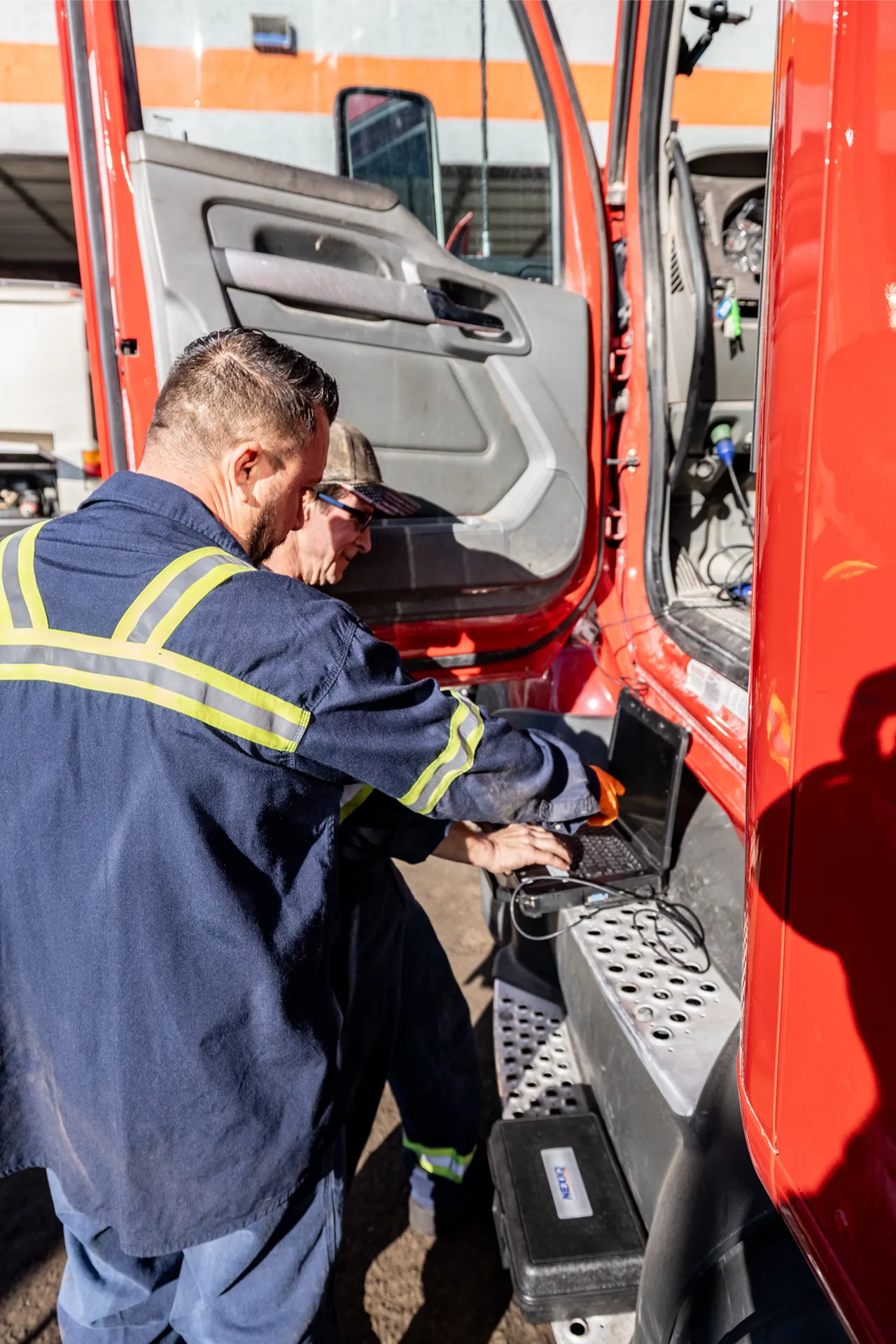
A loose airline may seem harmless while your truck sits in the yard. At interstate speed near the I-35/I-80 interchange, that same problem can affect trailer braking, vehicle control, and everyone around you.
The issue is simple: defects become harder and more dangerous to handle once you enter a busy freight corridor. A careful pre-trip inspection helps you find and report those problems while the truck remains parked, visible, and accessible.
Why Should You Inspect Your Truck Before Reaching the Interstate Ramp?
I-35 and I-80 carry heavy commercial traffic through the Des Moines metro. Drivers use these routes to reach Ames, Kansas City, Omaha, Iowa City, the Quad Cities, and markets well beyond Iowa.
Once you merge, higher speeds, congestion, lane changes, and sustained loads put greater stress on your air brake system, tires, steering, suspension, and trailer connections. Complete your inspection at the terminal, warehouse, service location, or staging area, not on an interchange shoulder.
Federal requirements place responsibility on drivers to confirm that their commercial vehicles are safe before operation. You must also review previously reported defects and ensure that safety-related problems have been corrected before dispatch.
What Documents and Previous Defects Should You Review?
Start before you touch the truck. Review your required documents and the previous driver vehicle inspection report so unresolved defects do not slip through the cracks.
Confirm that you have the applicable:
- Driver’s license and required endorsements
- Medical certification information
- Vehicle registration and insurance documents
- Shipping papers or bill of lading
- Hazardous-material documentation
- Current annual inspection documentation
- Previous inspection or defect report
A current annual inspection sticker does not replace your daily inspection. Each part of a combination vehicle may have its own inspection documentation, so check both the power unit and trailer.
Pay close attention to notes involving brakes, tires, lights, steering, coupling equipment, or fluid leaks. When a defect could affect safe operation, report it and have it corrected before entering I-35, I-80, or I-235.
How Do You Complete the In-Cab and Brake Checks?
Sit in the driver’s seat and scan the cab before starting the engine. Check the windshield, mirrors, cameras, seat belt, horn, wipers, washer system, heater, defroster, and emergency equipment.
Turn the key and watch the dashboard indicators. Confirm that the oil-pressure, coolant-temperature, voltage, and air-pressure gauges respond normally, and investigate warning lamps that remain illuminated.
How Should You Check an Air-Brake Vehicle?
The air brake system deserves special attention because compressed air activates the service brakes on most heavy-duty trucks. Follow your fleet procedures, the vehicle manufacturer’s instructions, and applicable regulations when completing the brake test.
Your check should cover:
- Air-pressure buildup
- Applied-pressure leakage
- Low-air warning operation
- Spring-brake activation
- Parking-brake holding ability
- Trailer-brake response
- Service-brake performance at low speed
Do not rely on the fact that the truck “still drives.” A slow air leak, weak brake response, or warning device failure may become much more serious during stop-and-go traffic on I-235 or while slowing a loaded combination on I-80.
Finish with a steering check. Excessive steering play, binding, unusual noises, or poor response requires attention before the vehicle leaves the yard.
What Should You Inspect on the Tractor or Power Unit?
Open the hood and inspect the engine compartment while the vehicle remains secured. Look for damaged components, loose wiring, and signs of fuel, oil, coolant, power-steering fluid, or air leakage.
Check the following commercial vehicle inspection points:
- Engine oil level
- Coolant level and condition
- Power-steering fluid
- Washer fluid
- Belts and hoses
- Battery mounts and connections
- Fuel and DEF levels
- Tank caps and mounting straps
A diesel cooling system moves engine heat into the coolant and releases it through the radiator. A deteriorated belt, damaged hose, coolant leak, or obstructed cooling surface can lead to overheating during a long interstate run.
Why Do Steer Tires and Wheel Ends Need Extra Attention?
Your steer tires directly affect directional control. Inspect them for proper inflation, adequate tread, cuts, bulges, exposed material, embedded objects, and irregular wear.
Examine the rims, lug nuts, hub seals, and visible wheel-end components. Oil around a hub, loose or missing fasteners, or signs of excessive heat can point to a developing wheel-end problem.
Continue through the steering and suspension components. Check linkage, springs, mounts, U-bolts, shocks, and air bags for looseness, cracks, shifting, or damage.
Inspect the brake hoses, chambers, drums, or rotors at each accessible wheel position. Do not dispatch the vehicle when you find contamination, damaged hoses, loose components, or another condition that could reduce braking performance.
How Do You Inspect the Fifth Wheel and Trailer Coupling?
Move to the coupling area and use a flashlight when visibility is limited. A proper fifth-wheel inspection helps prevent trailer separation, damaged connections, and loss of trailer braking or lighting.
Verify that:
- The fifth wheel is securely mounted
- The locking jaws fully engage the kingpin
- The release handle is seated correctly
- The kingpin and trailer apron show no obvious damage
- The trailer sits flush on the skid plate
- No improper gap exists between the tractor and trailer
- Required safety locks are engaged
Inspect the glad hands, seals, air lines, and electrical cable. Connections should be secure, and the lines should have enough clearance for turns without dragging, chafing, kinking, or stretching.
Then inspect the trailer frame, crossmembers, landing gear, suspension, tires, wheels, and brakes. Confirm that doors, latches, reflective tape, clearance lights, and marker lights remain secure and visible.
Flatbeds, tankers, doubles, dump trailers, lowboys, and specialized combinations require additional checks. Follow the procedures that apply to your specific equipment.
How Should You Verify Cargo Securement and Vehicle Dimensions?
A mechanically sound truck can still become unsafe when its load shifts. Before departure, complete a cargo securement check based on the freight, trailer type, and applicable securement requirements.
Inspect:
- Load distribution
- Tie-down condition and placement
- Working-load limits
- Blocking and bracing
- Trailer doors and seals
- Tarps and loose material
- Pallet or container movement
- Axle and gross-weight concerns
- Vehicle height and route clearance
Construction material, machinery, agricultural products, food and beverage freight, and palletized distribution loads each create different risks. Equipment hauled on a flatbed or lowboy may also require several securement methods and careful clearance planning.
Do not assume that a sealed trailer removes every driver responsibility. Your obligations depend on the loading method, seal conditions, cargo type, and applicable rules.
What Belongs in the Final Lights-and-Leaks Walk-Around?
Complete one last circuit around the entire combination before pulling away. This catches problems caused by yard movement, coupling, loading, or an earlier part of the inspection.
Confirm the operation of:
- Headlights and high beams
- Turn signals and four-way flashers
- Brake lights
- Tail, clearance, and marker lights
- License-plate light
- Reflectors and reflective tape
Look underneath the truck and trailer for fresh fluid or air leaks. Make sure all compartments and doors are closed, wheel chocks are removed, and no tools or loose objects remain near the vehicle.
A helper can verify brake-light operation. You may also use reflective surfaces or another fleet-approved inspection method when working alone.
Which August Inspection Items Matter Most in Des Moines?
August heat adds strain to tires, wheel ends, belts, hoses, and cooling systems. Check tire pressure while the tires are cold and use the fleet’s inflation specifications and tire-load information rather than a universal pressure figure.
Look for underinflation, sidewall damage, bulges, cuts, irregular wear, tread depth, and dual tires that touch. Heat generated by underinflation or overloading can quickly compound during sustained interstate travel.
Inspect coolant, hoses, belts, fan components, and the visible radiator and charge-air-cooler surfaces. A small leak or worn belt may turn into a roadside breakdown after miles of heavy operation.
Summer storms also reduce visibility and traction. Check your wiper blades, washer-fluid supply, tire tread, ABS indicators, exterior lights, and cargo covers before leaving Northeast Des Moines, Ankeny, the Southeast Des Moines industrial corridor, or the Des Moines International Airport area.
What Should You Do When the Inspection Reveals a Defect?
Document and report the problem immediately. Do not continue toward the interstate when the defect could affect safe vehicle operation.
A repair facility or qualified fleet technician should evaluate brake issues, active leaks, damaged tires, loose wheel components, steering defects, failed lights, coupling problems, or cooling-system concerns. Fixing the issue at the yard beats dealing with it beside a high-speed freight corridor.
Complete the Inspection Before You Enter the Freight Network
A reliable pre-trip inspection follows a consistent order: review the paperwork, test the cab and brakes, inspect the tractor, check the coupling and trailer, verify the load, and complete a final walk-around.
Do not rush because the dispatch clock is ticking. Those extra minutes can help you prevent a breakdown, roadside violation, cargo incident, or collision.
When your truck needs professional attention before entering I-35, I-80, or I-235, contact our team at Kustom Truck and Tire at 515-776-9747. Schedule the necessary inspection or repair before a manageable defect turns into an interstate emergency.
Frequently Asked Questions
When should a commercial driver complete a pre-trip inspection?
Complete the inspection before leaving the terminal, yard, warehouse, staging area, or service location. Finding a defect while the vehicle is parked is safer than discovering it after merging onto I-35, I-80, or I-235.
Does a current annual inspection replace the daily pre-trip inspection?
No. A current annual inspection does not replace the driver’s responsibility to inspect the commercial vehicle before operation. Drivers should also review previous defect reports and confirm that safety-related problems have been corrected.
What should be included in an air-brake pre-trip check?
An air-brake check should cover air-pressure buildup, applied-pressure leakage, low-air warning operation, spring-brake activation, parking-brake holding ability, trailer-brake response, and low-speed service-brake performance. Drivers should follow fleet procedures, manufacturer instructions, and applicable regulations.
What should a driver inspect around the fifth wheel and trailer coupling?
Check that the fifth wheel is secure, the locking jaws fully engage the kingpin, the release handle is seated, and the trailer sits flush against the skid plate. Inspect the glad hands, air lines, seals, and electrical cable for secure connections, damage, dragging, kinking, chafing, or stretching.
Which defects require attention before entering the interstate?
Do not dispatch the vehicle when you find brake problems, damaged tires, loose wheel components, steering defects, active fluid or air leaks, failed lights, coupling problems, or cooling-system concerns. Document the defect and have a qualified technician evaluate it before the truck enters service.
Why are tire and cooling-system checks especially important during August?
Summer heat increases stress on tires, wheel ends, belts, hoses, and cooling components. Underinflation, overloading, worn belts, damaged hoses, low coolant, or restricted cooling surfaces can quickly lead to a breakdown during sustained interstate operation.
More Articles

.webp)
%20(2).webp)
Contact Kustom Truck & Tire
Kustom Truck & Tire offers professional diesel mechanics for light to heavy-duty truck repair, commercial fleet maintenance, and roadside assistance in Des Moines, Iowa.
Get in touch with any questions, to request a quote, and to schedule service in Des Moines or the surrounding areas!