Prepare Your Diesel Exhaust System for Fall After Hot I-80 and I-35 Runs
Summer interstate miles can expose weak points in a truck’s aftertreatment system. Learn what Des Moines fleets should inspect this fall: from DPF regens and DEF faults to exhaust leaks, sensors, wiring, and warning signs that can lead to derates.
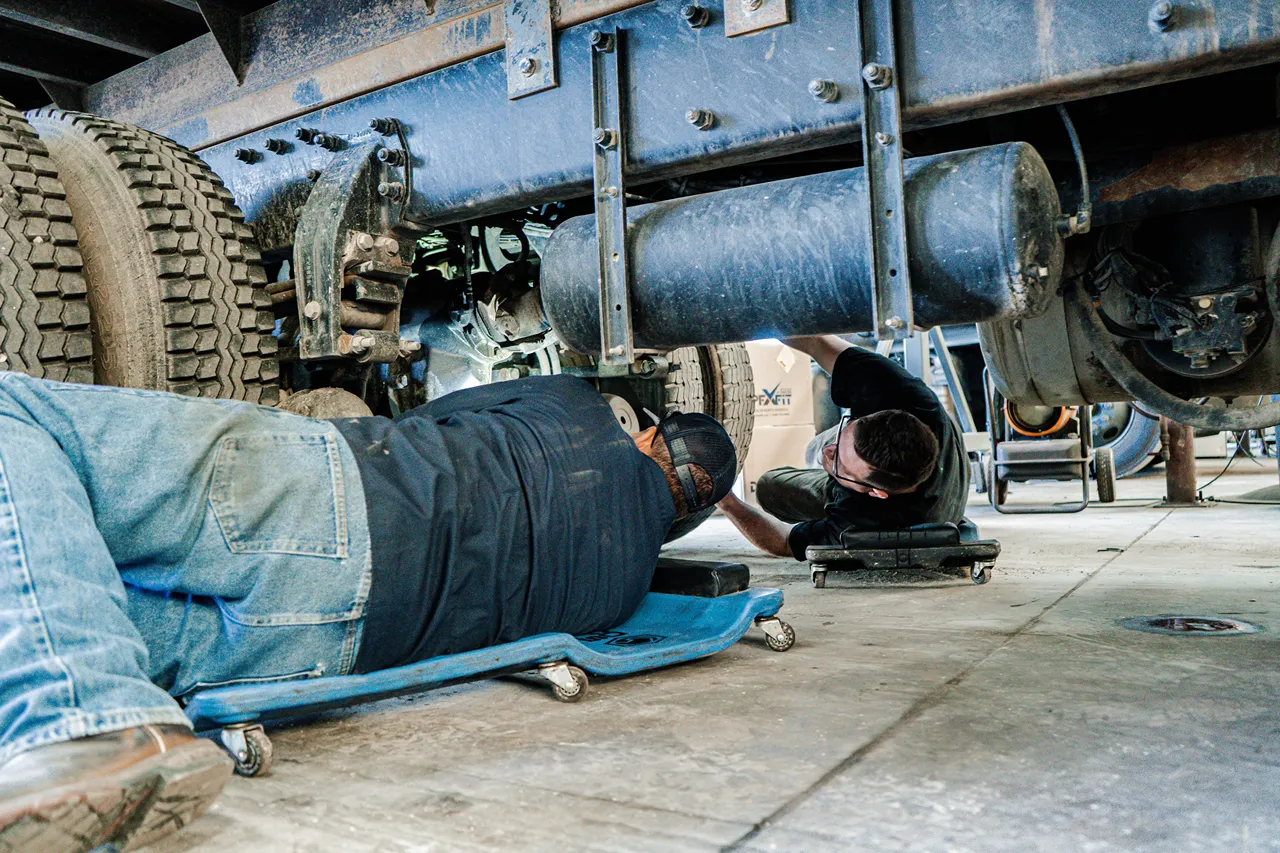
A truck can pull hard all summer on I-80 and I-35, then start throwing aftertreatment warnings just as fall arrives. That doesn’t necessarily mean summer heat caused the failure; months of mileage, engine hours, vibration, idling, and repeated duty cycles may have exposed a developing problem.
A post-summer diesel exhaust system inspection gives you a chance to catch recurring regens, DEF faults, leaks, and sensor problems before they become derates or roadside downtime.
Why Should Des Moines Fleets Inspect the Exhaust System After Summer?
Des Moines sits in the middle of significant interstate freight movement, with I-80 and I-35 serving regional and long-haul traffic throughout the metro. Iowa DOT’s 2026 State Freight Plan, approved July 28, 2026, continues to guide freight-system investment and address supply-chain and transportation challenges statewide.
Operating conditions around the metro can also change quickly. A Class 8 tractor may spend hours at sustained highway load before hitting congestion, lower-speed traffic, or local delivery stops near I-235.
That combination matters because diesel aftertreatment systems rely on the engine, exhaust temperatures, sensors, dosing equipment, and emissions components working together. Fall provides a useful maintenance window to investigate faults that appeared intermittently during heavy summer operation.
What Do Frequent DPF Regenerations Tell You?
A regeneration every so often is normal. Regenerations becoming noticeably more frequent, repeatedly failing, or being followed quickly by another DPF warning light deserve attention.
Watch for:
- A DPF light returning after regeneration
- Frequent regeneration events
- Interrupted or failed regens
- Rising soot-load warnings
- Reduced engine power
- Higher-than-normal fuel consumption
- Repeated pressure or temperature codes
Don’t automatically assume the filter itself is the problem. A truck struggling with combustion, airflow, oil consumption, sensors, or upstream exhaust leaks may produce conditions that repeatedly overload the DPF.
Why Is a Recurring DPF Problem Not Always “Just a DPF”?
Replacing or cleaning a DPF without finding the reason it keeps loading can turn into an expensive guessing game. The filter sits downstream from several systems that influence soot production and regeneration.
Recurring DPF trouble can be connected to:
- Injector or combustion problems
- Turbocharger faults
- EGR system problems
- Excessive engine oil consumption
- Coolant contamination
- Faulty exhaust temperature sensors
- Incorrect differential-pressure readings
- DEF dosing or SCR problems
- Exhaust leaks upstream of critical sensors
A proper DPF diagnosis should consider the whole system instead of treating the warning light as proof that one component has failed.
That distinction is especially important for high-mileage interstate trucks, refrigerated fleets, regional delivery units, and distribution vehicles that need predictable uptime.
What SCR and DEF Problems Should You Check Before Fall?
If something goes wrong with your selective catalytic reduction (SCR) system, the first clue may be a dash warning or diagnostic code. Ignoring the problem can eventually result in reduced engine performance or an emissions-related derate.
Check recurring DEF or SCR warnings promptly. Potential causes can include contaminated or poor-quality DEF, dosing faults, damaged components, connector problems, or NOx-sensor issues.
A warning that disappears after a restart isn’t necessarily gone for good. Intermittent faults are worth documenting and diagnosing before your truck heads back onto I-80 or I-35 under a loaded schedule.
Where Should You Look for Diesel Exhaust Leaks?
A small exhaust leak can cause more trouble than a little extra noise. Leaks can affect exhaust flow and may interfere with the readings used to manage aftertreatment operation when they occur in sensitive areas of the system.
Inspect clamps, joints, gaskets, flex sections, and exhaust piping. Black soot trails around a connection often provide an obvious clue that exhaust gases are escaping.
Drivers may also notice stronger exhaust odor around the cab or chassis, a change in exhaust tone, or unusual hissing and ticking sounds.
Those signs deserve attention. Exhaust piping lives in a harsh environment filled with heat cycles, vibration, moisture, and road exposure.
Can Temperature and Pressure Sensors Cause Regeneration Problems?
Absolutely. Exhaust temperature sensors and differential-pressure sensors give the engine control system information it needs to monitor aftertreatment conditions.
Bad information can produce bad decisions.
A temperature sensor that reports an inaccurate reading can interfere with regeneration management. Likewise, an inaccurate differential pressure sensor reading may make the system interpret DPF restriction incorrectly.
If you have repeated sensor codes, failed regenerations, or warning lights that return after repairs, diagnosis should include the sensor itself, its related tubes or passages where applicable, and the electrical circuit, not simply the component named in the fault code.
What Should You Inspect on the DOC and DPF?
The diesel oxidation catalyst, or DOC, helps oxidize carbon monoxide and hydrocarbons before exhaust continues through the rest of the aftertreatment system. The DPF then captures particulate matter.
A fall inspection should look beyond electronic codes and consider the physical condition of these components.
Depending on symptoms and service history, technicians may need to check for excessive soot, ash accumulation, contamination, restriction, or physical damage. Ash is particularly important because, unlike soot removed through regeneration, noncombustible material eventually requires appropriate filter servicing.
Don’t condemn a sensor before checking the component it is supposed to monitor.
Why Should Wiring and Electrical Connections Be Part of the Inspection?
Aftertreatment systems depend heavily on sensors, modules, wiring, grounds, and connectors. Months of engine heat, chassis vibration, moisture, and road exposure can turn a marginal connection into an intermittent fault.
Inspect aftertreatment wiring for chafing, loose connectors, damaged insulation, corrosion, poor grounds, and heat-related deterioration.
Intermittent electrical problems can be frustrating because the warning may disappear before the truck reaches the shop. Recording when the fault occurs—including load, speed, ambient conditions, and whether a regeneration was underway—can make diagnosis much more efficient.
What Warning Signs Mean It Is Time to Schedule Exhaust Service?
Don’t wait for a full derate before investigating a pattern. Schedule diagnosis when you notice:
- DPF or check-engine lights returning after a regen
- Regenerations happening more often than usual
- Failed or interrupted regenerations
- DEF or SCR fault messages
- Reduced-power or derate warnings
- Repeated NOx, temperature, or pressure-sensor codes
- Visible soot around exhaust joints
- Unusual exhaust noises or strong exhaust odors
- Increasing fuel consumption without an obvious explanation
These symptoms matter for Class 8 tractors, box trucks, vocational diesel trucks, refrigerated units, and other high-mileage commercial vehicles.
The Des Moines interstate network is only getting busier. Iowa DOT says traffic around the I-80/I-35 Hickman Road interchange is projected to increase nearly 35% by 2042, which helps illustrate the importance of these corridors to local vehicle movement.
Make Fall a Post-Summer Aftertreatment Inspection Point
Summer mileage doesn’t automatically cause an aftertreatment failure. What it can do is give existing weaknesses plenty of opportunities to show themselves.
Recurring regens, DEF warnings, soot around exhaust joints, intermittent sensor codes, and unusual fuel consumption are worth investigating before another busy freight season puts additional demand on your trucks.
For fleets operating throughout Des Moines and along I-80, I-35, and I-235, addressing those warning signs early can help prevent a manageable exhaust-system issue from turning into a derate or roadside interruption.
Schedule Your Aftertreatment System Service With Kustom Truck & Tire
If your truck keeps requesting regens, displaying DEF or SCR faults, showing sensor codes, or developing signs of an exhaust leak, schedule your EGR and DPF inspection with Kustom Truck & Tire. A thorough diagnosis can help identify the underlying problem before your next I-80 or I-35 run ends with reduced power or unexpected downtime.
FAQs
Why does my diesel truck keep requesting a DPF regeneration?
Frequent regeneration can result from excessive soot production, incomplete previous regens, restricted aftertreatment components, sensor problems, exhaust leaks, or underlying engine issues. The cause should be diagnosed instead of assuming the DPF simply needs cleaning.
Can a bad sensor cause a DPF regeneration to fail?
Yes. Incorrect exhaust-gas temperature or differential-pressure information can interfere with how the truck monitors DPF loading and manages regeneration. Wiring, connectors, pressure passages, and related components should also be inspected before replacing a sensor.
What happens if I continue driving with an SCR or DEF fault?
Some SCR and DEF faults can eventually trigger reduced engine power or a derate if the underlying emissions-system problem remains unresolved. Diagnose recurring warnings promptly, particularly before long interstate runs.
How can I tell whether my truck has an exhaust leak?
Common clues include soot marks around clamps or joints, unusual exhaust noise, stronger exhaust odor, and visible damage to flex sections or piping. A professional inspection can locate leaks that aren't easy to see.
Is fall a good time to inspect a diesel aftertreatment system?
Yes. Fall provides a practical opportunity to investigate recurring problems that surfaced during summer mileage and high operating hours. It allows fleets to address DPF, SCR, DEF, sensor, wiring, and exhaust-leak problems before they contribute to downtime later in the year.
More Articles
.webp)

.webp)
Contact Kustom Truck & Tire
Kustom Truck & Tire offers professional diesel mechanics for light to heavy-duty truck repair, commercial fleet maintenance, and roadside assistance in Des Moines, Iowa.
Get in touch with any questions, to request a quote, and to schedule service in Des Moines or the surrounding areas!