Why Des Moines Semi-Trucks Vibrate Under Load on I-80
Does your semi-truck shake when accelerating under load? Discover how worn U-joints, failing carrier bearings, driveshaft imbalance, and incorrect driveline angles cause vibration, and when Des Moines fleets should schedule professional repairs before their next I-80 haul.
Quick Answer
Semi truck vibration under load can result from worn U-joints, failing carrier bearings, damaged driveshafts, incorrect driveline angles, or loose mounting components. Vibrations that intensify during acceleration may indicate torque-related driveline faults, while speed-dependent shaking can suggest rotational imbalance. Professional diagnostics help distinguish these problems from tire, wheel-end, and engine-related vibrations.
Key Takeaways
- Worn U-joints cause vibration under torque: Damaged bearings and excessive mechanical play can produce shaking and clunking during acceleration.
- Failing carrier bearings allow excessive movement: Deteriorating center supports can cause driveline shudder and rumbling beneath the cab.
- Driveshaft imbalance produces speed-dependent vibration: Bent tubing, missing balance weights, and physical damage can disrupt smooth rotation.
- Incorrect driveline angles affect power transfer: Improper ride height and U-joint phasing can produce persistent vibration.
- Loose driveline connections create mechanical play: Worn yokes, slip joints, and mounting hardware can contribute to acceleration-related shaking.
- Not every vibration originates in the driveline: Professional testing helps distinguish driveshaft faults from tire and wheel-related problems.
Your semi-truck runs smoothly through the freight yard, but the moment you accelerate onto I-80 with a loaded trailer, the cab starts shaking. Although tire imbalance might seem like the obvious culprit, vibration that changes with applied engine torque can indicate a developing driveline fault.
For Des Moines commercial fleets, understanding these differences can help identify mechanical problems before they cause more extensive damage or interrupt scheduled freight operations.
Why Does Your Semi-Truck Vibrate More Under Load?
Your driveline transfers engine torque from the transmission to the drive axles through rotating shafts, universal joints, and associated components.
When accelerating with a loaded trailer, these components transmit greater torque. Existing mechanical play, worn bearings, or incorrect operating angles can become more noticeable under these conditions.
Unlike some tire-related vibrations, semi truck vibration when accelerating may diminish when you release the accelerator, even while maintaining approximately the same road speed. This behavior provides a useful diagnostic clue, although it doesn't confirm a specific component failure.
5 Common Causes of Semi-Truck Driveline Vibration
1. Worn or Seized Universal Joints
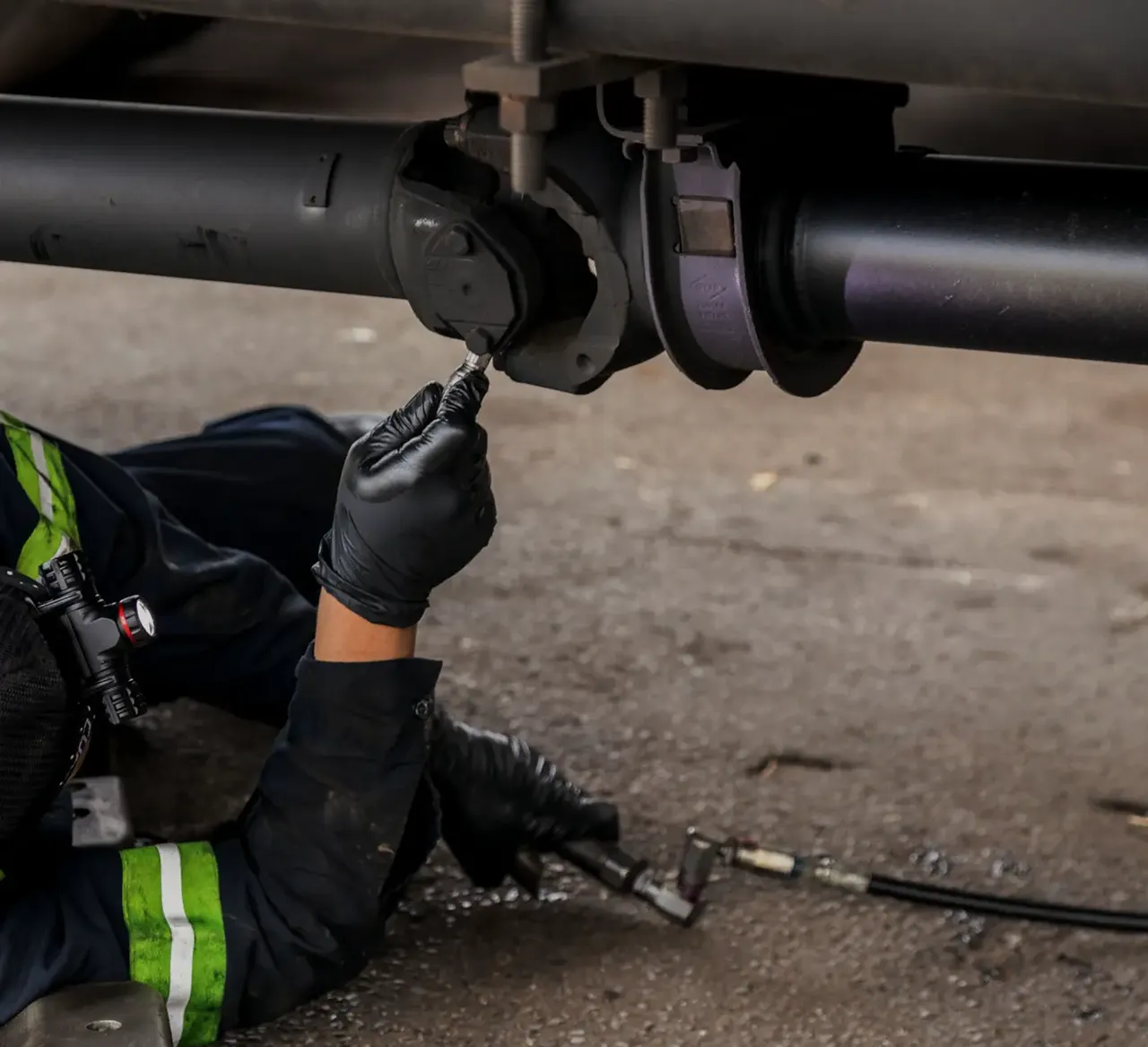
Universal joints, commonly called U-joints, allow driveshafts to transmit rotational power while accommodating changes in driveline operating angles.
Worn needle bearings, damaged seals, inadequate lubrication on serviceable joints, and excessive mechanical play can interfere with smooth power transfer.
Common heavy-duty truck U-joint problems produce symptoms such as:
- Rhythmic vibration during acceleration.
- Clunking when applying or releasing power.
- Excessive mechanical play.
- Damaged bearing seals or visible corrosion.
- Abnormal driveline noises under load.
November overnight temperatures in Des Moines average approximately 30°F. Colder conditions can make existing lubrication problems more noticeable, although freezing temperatures alone do not cause U-joint failure.
2. Failing Carrier Bearings and Center Supports
Multi-piece driveshaft assemblies use center support bearings to maintain shaft positioning and support smooth rotation. A worn bearing or deteriorating rubber support can allow excessive shaft movement.
Common truck carrier bearing failure symptoms include shuddering during acceleration, rumbling beneath the cab, and vibration within particular road-speed ranges.
Distribution tractors operating between I-80 and I-35 may experience these symptoms during repeated loaded departures. Technicians should inspect both the bearing and its mounting assembly to determine whether excessive movement contributes to the vibration.
3. Bent or Improperly Balanced Driveshafts
A driveshaft must rotate with appropriate balance and alignment. Bent tubing, missing balance weights, impact damage, and accumulated debris can disrupt its rotational balance.
Typical driveshaft imbalance symptoms include:
- Vibration that increases with road speed.
- Shaking through the cab floor.
- Pronounced vibration within specific speed ranges.
- Visible dents or deformation in the shaft.
Unlike torque-related U-joint problems, imbalance often corresponds more closely with driveshaft rotational speed.
Professional heavy-duty truck driveline repair can involve measuring shaft runout, evaluating balance, and identifying damaged components before recommending replacement.
4. Incorrect Driveline Angles and U-Joint Phasing
The operating angles between your transmission, driveshaft, and drive axle influence how smoothly the driveline transfers power.
Improperly matched operating angles or incorrect U-joint phasing can produce rotational speed fluctuations and torsional vibration.
Potential contributing factors include:
- Incorrect driveshaft reassembly.
- Improper suspension ride height.
- Damaged center-bearing supports.
- Incorrectly installed driveline components.
- Improper U-joint phasing.
Replacing worn joints may not eliminate semi-truck driveshaft vibration if incorrect driveline geometry remains unresolved. Technicians should evaluate operating angles according to manufacturer specifications.
5. Loose Yokes, Worn Slip Joints, and Damaged Mounting Hardware
Driveline yokes, splined slip joints, retainers, and mounting hardware must maintain secure connections while accommodating normal suspension movement.
Excessive wear or loose components can create mechanical play when torque changes during acceleration and deceleration.
Clunking during takeoff, unusual rotational movement, and recurring vibration under load may indicate deteriorating connections. Comprehensive inspection helps identify the actual source rather than replacing individual components unnecessarily.
How to Distinguish Driveline Vibration From Tire and Wheel Problems
Identifying when vibration occurs can help narrow down its mechanical source. Encourage your drivers to document the following symptoms:
- Vibration intensifies during acceleration: Worn U-joints, incorrect driveline angles, or damaged mounts may be responsible.
- Vibration occurs at specific road speeds: Driveshaft imbalance, carrier bearings, or tire and wheel problems warrant investigation.
- Clunking when applying or releasing power: Worn yokes, slip joints, or U-joints may create excessive mechanical play.
- Shaking primarily through the steering wheel: Tire, steering, or wheel-end problems may require assessment.
- Vibration changes with cargo weight: Load-sensitive driveline angles or suspension ride-height problems could contribute.
These observations provide diagnostic clues rather than definitive conclusions. Record vehicle speed, load conditions, and accompanying noises to help technicians identify the underlying fault.
Never attempt to reproduce severe vibration through potentially unsafe road testing.
When Should You Schedule a Professional Driveline Inspection?
Persistent vibration, loud mechanical clunks, and suspected loose driveline components warrant immediate attention. Continuing to operate with deteriorating components can increase the risk of more extensive damage or driveshaft separation.
Under 49 CFR § 396.3, motor carriers must systematically inspect, repair, and maintain covered commercial vehicles. Additionally, 49 CFR § 396.7 restricts operation when mechanical conditions are likely to cause accidents or breakdowns.
Never crawl underneath an improperly secured or unsupported truck. Qualified technicians should perform detailed mechanical inspections using appropriate safety procedures.
Eliminate Driveline Vibration With Kustom Truck & Tire
Persistent shaking under load doesn't automatically mean your truck needs a new driveshaft. Identifying worn U-joints, failing bearings, incorrect operating angles, and loose connections can help prevent unnecessary component replacements.
At Kustom Truck & Tire, we provide heavy-duty driveshaft repair, U-joint replacement, carrier bearing replacement, and driveline balancing. Visit our shop at 1425 E Aurora Avenue or call (515) 776-9747 to schedule driveline diagnostics. We'll help identify what's causing your truck to vibrate before it disrupts your next I-80 freight run.
Frequently Asked Questions
Why Does My Semi-Truck Vibrate Under Load?
Semi-trucks can vibrate under load because of worn U-joints, failing carrier bearings, incorrect driveline angles, worn slip joints, or loose mounting components. Vibration that changes with applied engine torque may indicate a driveline problem requiring professional diagnostics.
What Are the Symptoms of a Bad U-Joint on a Semi-Truck?
Common symptoms include clunking during acceleration or deceleration, rhythmic vibration, excessive mechanical play, and abnormal driveline noises. Damaged bearing seals and visible corrosion may also indicate deterioration.
Can a Bad Carrier Bearing Cause Vibration During Acceleration?
Yes. A worn carrier bearing or deteriorating rubber support can allow excessive driveshaft movement, producing shuddering during acceleration, rumbling noises, and vibration at certain road speeds.
How Can You Tell the Difference Between Tire Vibration and Driveshaft Vibration?
Tire-related vibration commonly changes with road speed, while certain driveline vibrations change with applied engine torque or load. However, driveshaft imbalance can also produce speed-dependent vibration. Professional testing helps distinguish between these overlapping symptoms.
Is It Safe to Drive a Semi-Truck With Driveline Vibration?
Significant vibration, loud clunking, or suspected loose driveline components require professional assessment before continuing normal operation. Driving with deteriorating driveline components can increase the risk of mechanical failure and extensive secondary damage.
More Articles


Contact Kustom Truck & Tire
Kustom Truck & Tire offers professional diesel mechanics for light to heavy-duty truck repair, commercial fleet maintenance, and roadside assistance in Des Moines, Iowa.
Get in touch with any questions, to request a quote, and to schedule service in Des Moines or the surrounding areas!